
Quick Answer
Vite wraps its file watcher so that adding a watched file after shutdown begins cannot reopen it. The patch targets late calls from plugins and code using the exposed watcher.
In Plain English
A watcher tells the development server when files change. Closing the server should release the associated resources. The underlying watcher can reopen when its add method is called, which creates a race if an asynchronous plugin still has work in flight.
Code Evidence
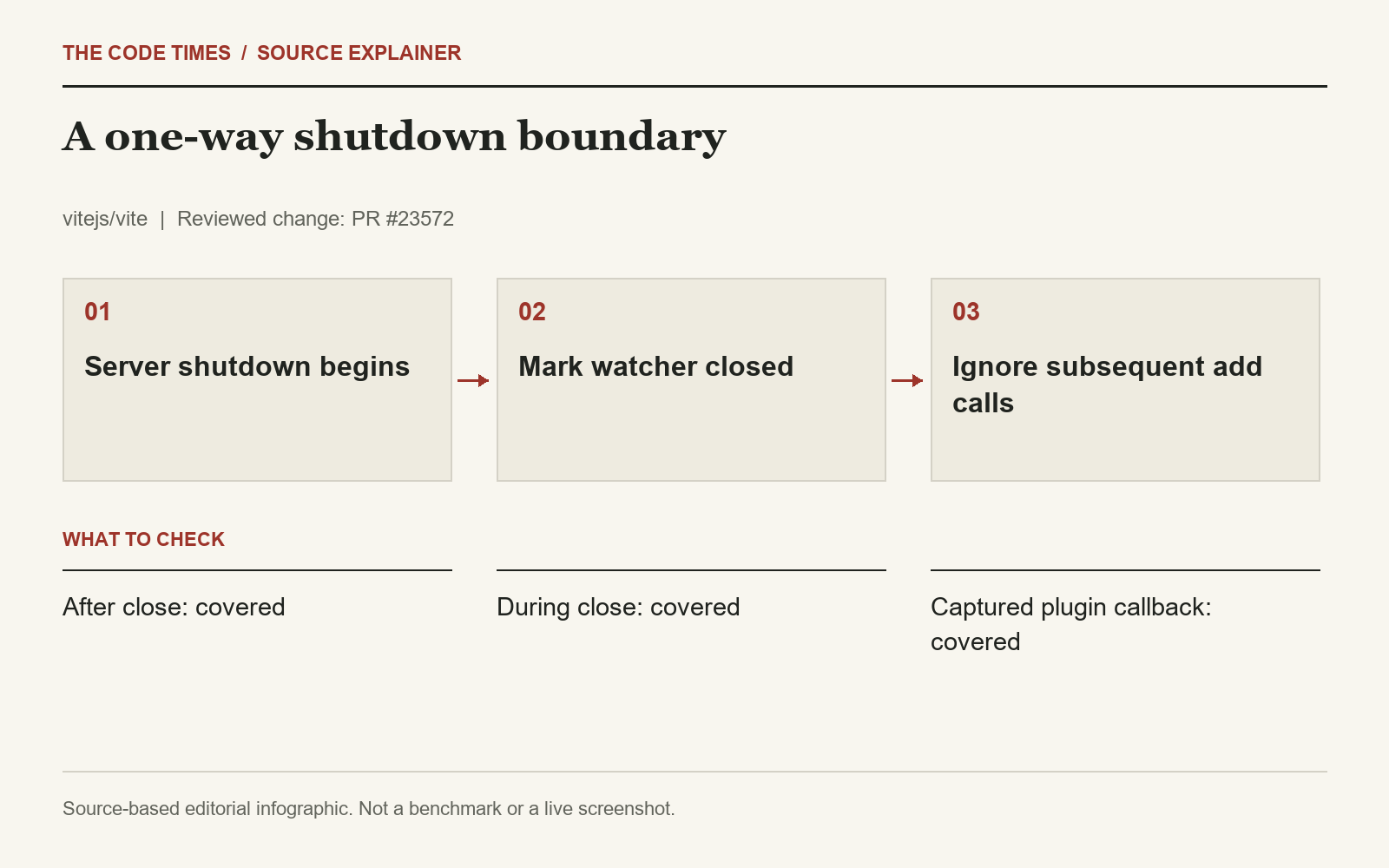
The new makeWatcherCloseFinal helper in packages/vite/src/node/watch.ts records a closed flag before forwarding close. Once that flag is set, add returns the watcher without registering more files. Server creation uses the wrapper. Regression tests cover calls after shutdown, while shutdown is pending, and through a plugin callback captured earlier.
Closing begins before cleanup finishes
The timing of the flag is the central detail. An asynchronous close operation can begin, yield while resources are being released, and finish later. If the wrapper waited until completion to declare the watcher closed, a plugin could still call add during that interval. Recording the closed state before forwarding close makes the boundary effective from the start of shutdown. Subsequent add calls return the watcher without registering additional paths.
Returning the watcher also preserves the shape of the add operation for callers that expect it. The wrapper changes the effect of a late call, not the object a caller receives. Before closure, normal registration can continue; once closure begins, the owner has made a final lifecycle decision. The tests' coverage of both pending and completed shutdown reflects that distinction. A test only after an awaited close would not exercise the race window that exists while cleanup is still underway.
How delayed plugin work reaches a closed watcher
Consider a plugin that starts an asynchronous task during server setup and saves a callback that later registers a generated file. A test harness closes the server before that task resolves. When the callback eventually runs, it still holds access to the watcher even though the server's useful lifetime has ended. Without a final boundary, an add operation capable of reopening the underlying watcher can undo part of the shutdown. This scenario illustrates the kind of ownership mismatch addressed by the patch.
The regression case involving a callback captured earlier is therefore more informative than a direct method call alone. It represents access that survives beyond the phase in which it was obtained. The wrapper sits on the watcher used by server creation, so the rule is enforced at the resource boundary rather than depending on every plugin to notice the same timing. This does not relieve plugins of responsibility for canceling work; it makes this particular late registration unable to revive the watcher.
What maintainers should verify
A focused lifecycle check should cover three moments: ordinary registration while the server is active, a late add while close is pending, and an add after close completes. Include the delayed callback shape if the plugin saves watcher access for later. Observe the closed state and whether late registration changes it. These are proposed checks based on the upstream regression structure, not claims that this article ran a local server or measured open operating-system handles.
If a test process still remains alive after upgrading, inspect the remaining resources rather than concluding the patch failed. A plugin may own timers, sockets, child processes, or unfinished asynchronous operations that never pass through watcher.add. The wrapper cannot close those resources on its behalf. A useful investigation records which resource remains active and who created it, then checks that owner's shutdown behavior. That keeps the evidence tied to the actual lifecycle involved.
There is a broader design lesson in the word final: once an owner has disposed of a resource, accepting new work may be more surprising than ignoring it. Here the maintainers choose a harmless return for late adds and verify the watcher's closed state deterministically. The reviewed tests support that boundary. They do not quantify memory savings, establish a universal shutdown-time improvement, or identify every possible source of a development process that fails to exit.
Why It Matters
This is a useful lifecycle boundary for teams running development servers inside test suites or other long-lived tools. Our reading is that late work becomes harmless at this boundary rather than reviving a resource that the owner has already closed. The patch does not establish that every shutdown delay in Vite has the same cause.
An Open Question
Can a plugin still retain other resources after the server closes? Yes, the wrapper only addresses this watcher path. Plugin authors should separately account for their own timers, sockets, and background operations.
Scope and Limitations
The tests use the watcher’s closed state for deterministic assertions. We inspected those assertions and the wrapper; we did not run a resource-leak benchmark.